The Massachusetts Institute of Technology (MIT) is working on a new computer vision technology to turn “any shiny object into a camera of sorts.” Its creators say that its uses range from self-driving cars to solving crimes. They’re calling this ORCa, which is short for Objects as Radiance-Field Cameras.
True to its name, ORCa will work on any reflective surface. These could be coffee mugs, metallic paperweights, streetlight poles, and shiny cars. So when a camera uses this technology, it will be able to clearly see reflections from any metallic surface that it captures.
How does MIT ORCa work and who is it for?
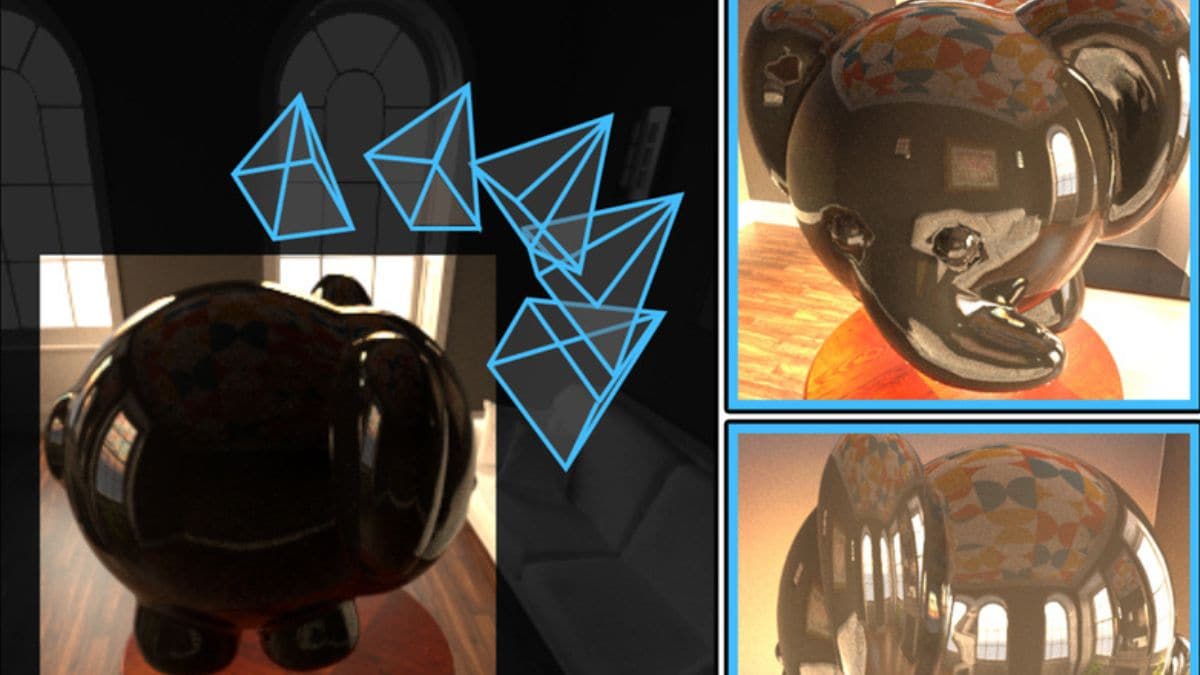
A demo of the ORCa technology from MIT
ORCa is a joint effort from MIT and Rice University researchers. They’ve published a paper on how this will work and what it can do. Let’s understand how it works with a simple example.
When you use this technology to capture a shiny thing like a ceramic mug, it uses photos from multiple angles to map the mug’s surface. Once this is done, an AI system turns the mug into a virtual sensor to capture reflections. In other words, MIT’s computer vision technology is turning anything shiny into a mirror to see things you would otherwise miss.
But the magic doesn’t end here. This computer vision has another AI that adds depth and new viewing angles to the reflections. As a result, the output image is sharp enough to create a mirror image from a shiny surface. And this is amazing technology because you’re not actively trying to capture the reflections. The system just happens to be powerful enough to bring those out of anything the camera sees.
So where will we use this?
The official MIT release says this technology can be used by self-driving cars. It says that the tech “could enable a self-driving car to use reflections from objects it passes, like lamp posts or buildings, to see around a parked truck”.
Moreover, researchers plan to use ORCa for drone images. It could capture faint reflections from the objects on the ground, and build a POV from those images. They also plan to make it capture shadows and combine two objects to reveal a new part of the scene.
The current crop of self-driving cars has its fair share of limitations. However, as the tech gets more accessible, more and more vehicles are expected to come with self-driving, or at least better assist cameras. When ORCa is ready, we can expect it to make driving safer.
The post MIT’s latest tech will turn your coffee mug into a camera appeared first on Techlusive.
from Techlusive https://ift.tt/JPIGXTz
via
IFTTT
Comments
Post a Comment
add